What Happens to Client Data When Your VA Uses an Unsecured Device?
Most agency owners don't ask this question when they hire a virtual assistant.
They focus on skills, experience, availability, and whether the VA can handle the workload.
Data security often becomes part of the conversation later — usually after a concern appears or something goes wrong.
But for insurance agencies, security should be considered before access is ever provided.
A VA may need access to agency management systems, carrier portals, email accounts, and client files to complete daily tasks. The question is not only whether the person can do the work.
The question is:
How is your client data being protected while that work is being completed?
Before granting access to sensitive systems, agencies should establish clear workflows, responsibilities, and security expectations. A strong onboarding process helps ensure everyone understands what information they can access and how it should be handled. Learn more about how to onboard a virtual assistant at your insurance agency.
The Default VA Work Setup
The default setup for many VA arrangements is simple:
The VA uses their own computer, connects to your systems through a browser or VPN, and works remotely from their location.
For many industries, this arrangement may be acceptable.
However, insurance agencies handle a different type of information.
Client records, policy details, claims information, and personally identifiable information require stronger controls because the agency has a responsibility to protect the information entrusted to them.
When a VA works from a personal device, the agency may have limited visibility into:
How the device is maintained
Whether security updates are installed
Who else can access the device
Where information may be stored temporarily
Whether activity can be monitored
The issue is not that every personal device is unsafe.
The issue is that the agency may not have enough control or visibility.
What "Access" Actually Means
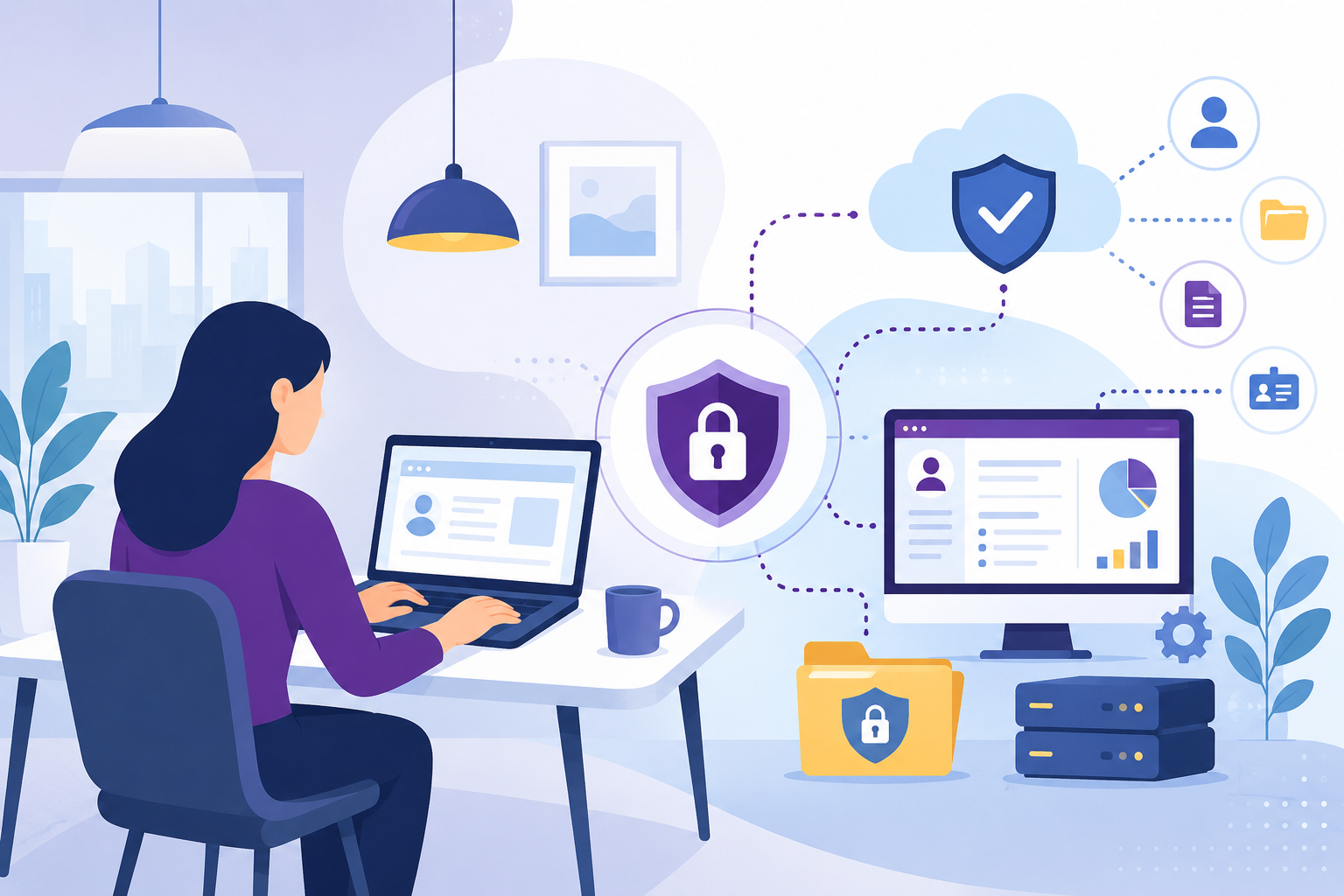
When your VA logs into your AMS, carrier portals, or client files, they may access information that includes:
Client names, addresses, and contact information
Social Security numbers for certain insurance applications
Health information for applicable life and health products
Financial details and policy values
Claims information
Personally identifiable information protected under applicable privacy regulations
Many agency owners think of cloud-based systems as meaning the information exists only online.
But access still happens through a physical device.
Depending on system settings and security controls, information may be viewed, downloaded, temporarily stored, or accessed through the local device environment.
This is why system access management matters.
For agencies using platforms such as Applied Epic, AMS360, EZLynx, or similar systems, understanding what tasks can be delegated and how access should be managed is important. Learn more about what a virtual assistant can do in Applied Epic, AMS360, and EZLynx.
What Happens When That Device Is Compromised?
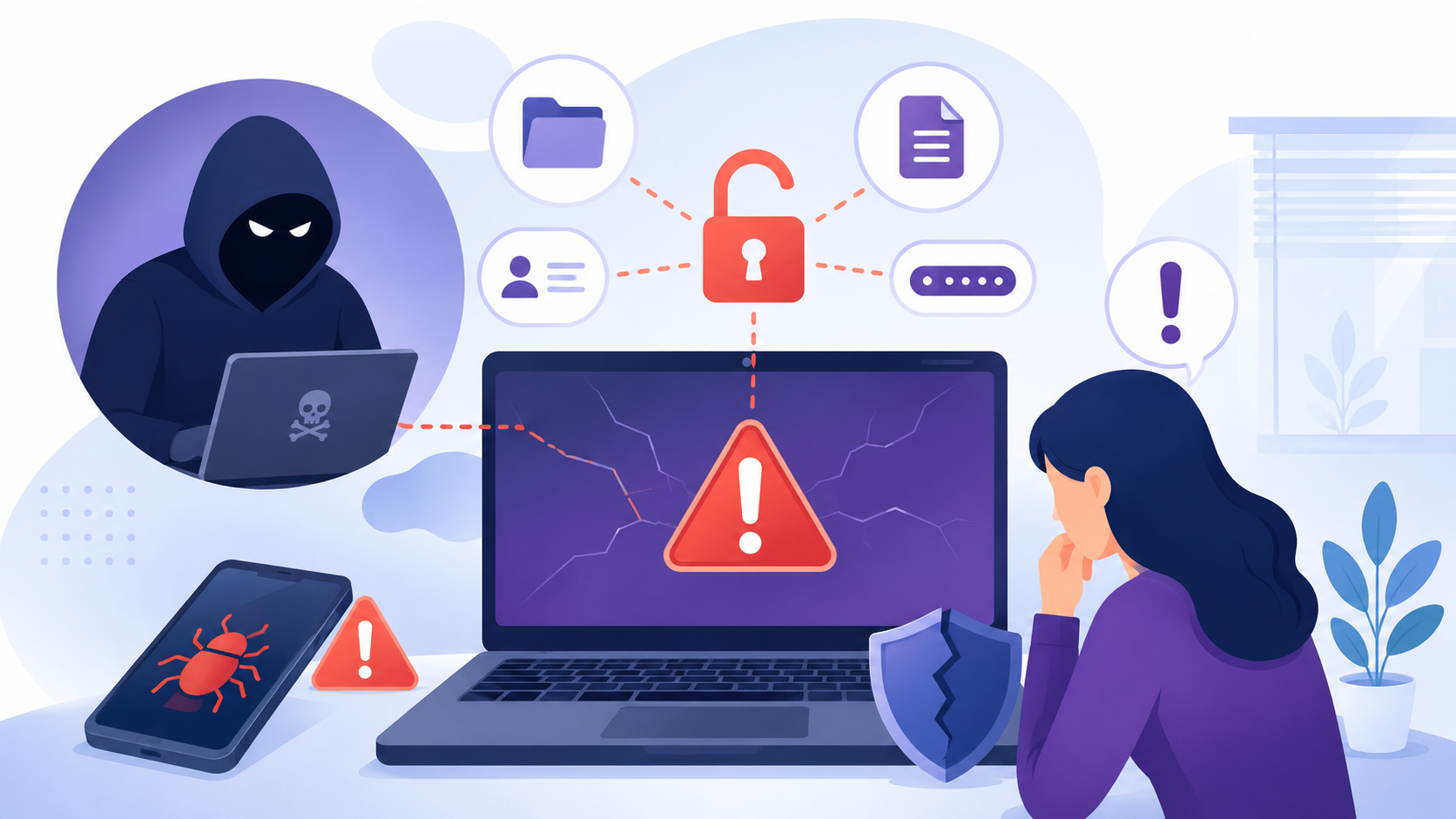
Personal devices can be lost, stolen, infected with malware, or accessed by unauthorized individuals.
When a device used for agency work is compromised, information accessed through that device may also be at risk.
The agency may not immediately know:
What information was accessed
Whether files were copied
Whether login credentials were exposed
How long unauthorized access existed
You may not receive an immediate warning.
The first indication could come from unusual account activity, a client concern, or a security review.
That is why agencies should not rely only on trust.
They need systems and processes designed to reduce unnecessary exposure.
The Regulatory Exposure
Insurance agencies operate in a highly regulated environment where protecting customer information is essential.
Many states have adopted insurance data security requirements based on frameworks such as the NAIC Insurance Data Security Model Law. These requirements emphasize the importance of reasonable security practices when handling policyholder information, including information accessed by third-party service providers.
A VA may perform the work, but the agency remains responsible for ensuring appropriate safeguards are in place.
"I didn't know my VA's device was compromised" is not the type of explanation an agency wants to depend on after a security incident.
The better approach is creating security practices before problems occur.
The Breach Notification Burden
A data incident creates more than a technical issue.
Depending on the circumstances and applicable requirements, agencies may need to:
Investigate what happened
Identify potentially affected individuals
Communicate with clients
Review internal security practices
Improve processes moving forward
Beyond the operational cost, there is also a relationship cost.
Insurance clients trust agencies with sensitive personal information. A security incident can affect that trust and create concerns that take significant time to repair.
Strong client relationships depend not only on communication but also on protecting the information behind those relationships. Learn how a virtual assistant can help insurance agencies improve client retention.
The Fix
The solution is not refusing to use virtual assistants.
The solution is ensuring your VA works within an environment designed for secure access.
A virtual machine environment provides an alternative to relying on a personal computer.
Instead of completing agency work directly on a personal device, the VA works inside a controlled environment where access can be managed more consistently.
With the right setup:
Data remains inside the secured environment
Access permissions can be controlled
User access can be reviewed and adjusted
Access can be removed when responsibilities change
Security practices remain consistent
The goal is simple:
Give your team the support they need while maintaining control over sensitive client information.
Why SecureEVAs Builds Security Into Every Engagement
SecureEVAs understands that insurance agencies cannot treat security as an afterthought.
Your VA is not just completing administrative tasks. They may be interacting with systems and information that directly impact your clients.
That is why SecureEVAs incorporates security-focused processes into its VA model.
Our VAs work within controlled technology environments designed to help agencies manage access, protect information, and scale support more responsibly.
For agencies comparing different support models, security should be part of the decision — not something considered after hiring. See how insurance agencies compare virtual assistants versus in-house CSR costs and responsibilities.
Protect Your Client Data While Growing Your Agency
The question should not only be:
"Can this VA do the work?"
The better question is:
"Can this VA do the work inside an environment that protects our clients and our agency?"
Skills matter.
Experience matters.
But security matters too.
The right virtual assistant model allows agencies to increase capacity while protecting the client information their business depends on.